

From a white dot to a heart
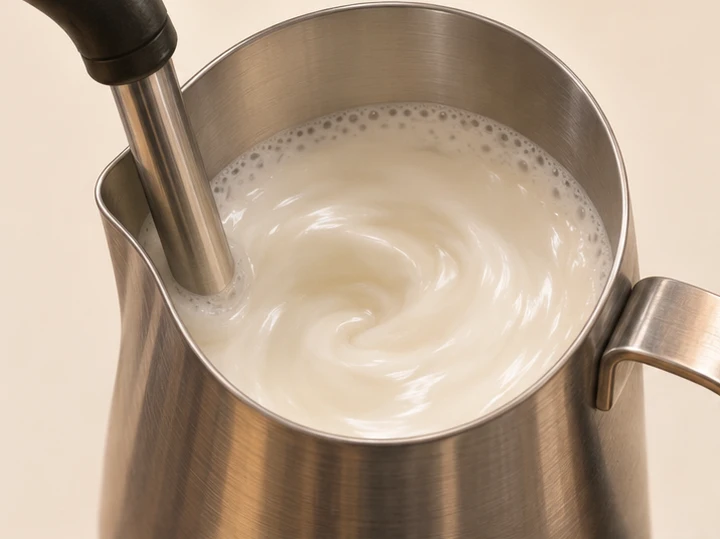
1. Texture the milk
Start cold. Introduce a little air near the surface, then submerge the steam tip just enough to roll the milk in a whirlpool. Stop once the milk is hot and glossy. Wipe and purge the wand, then swirl the jug. The foam should flow with the milk like wet paint.
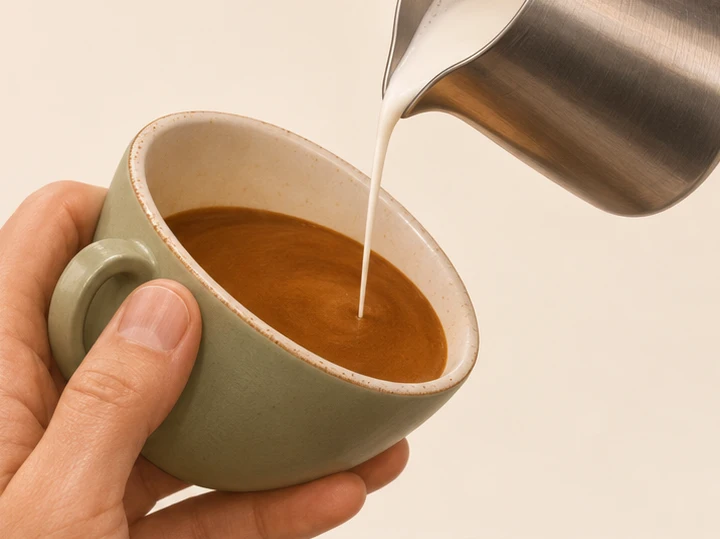
2. Build a brown canvas
Swirl the espresso, tilt the cup towards the spout and begin with a narrow stream from several centimetres up. The milk should mix beneath the crema. Fill roughly halfway, leaving room for the design.

3. Place the white circle
Bring the spout almost to the surface, just behind the centre. Increase the flow. A white disc should spread towards the far rim. Level the cup slowly as it fills. For the first few pours, practise making that disc on purpose.

4. Cut the heart
Once the disc is large enough, lift the jug, narrow the stream and draw straight through its centre towards the far edge. A broad stream bulldozes the shape; a fine one draws the point.
Read the result. No white? Get closer before increasing flow. A blob that slides off the jug? Introduce less air and swirl sooner. A pale, washed-out canvas? Start the mixing pour higher. Keep the same cup for three attempts and change one thing per pour.
Move on to a tulip by placing a second, smaller disc behind the first, gently pushing it forward and cutting through both. For a rosetta, add a small side-to-side movement while drawing the spout back. Aim for repeatable hearts before chasing more leaves.
Further reading baristahustle.com, darkwoodscoffee.co.uk